I’m about to share my CAD files with a factory in China for a custom vibrator line, and honestly I’m nervous. I keep hearing horror stories about suppliers stealing designs or selling the same product to competitors under a different brand. If I pay for the mold, does that mean I own it? And what about the 3D design files I sent over, do they still belong to me? I don’t want to invest six months into a product only to see it on Alibaba next month with someone else’s logo on it.
Short answer first, because I know you’re busy. Just because you pay for the mold doesn’t automatically mean you own the intellectual property. In China and most Asian manufacturing markets, the default legal position is that the factory owns the mold unless your contract explicitly says otherwise. Same goes for your design files. If you don’t have a signed NDA and a tooling agreement that spells out ownership, you’re relying on the factory’s goodwill, and goodwill is not a legal strategy.
Let me tell you about a buyer I know who learned this the hard way. He paid $4,200 for a custom silicone mold for a prostate massager, shipped his full 3D CAD files and packaging designs to the factory, and placed a 2,000-unit order. Six months later, he found the exact same product on a competitor’s website. The mold was his, technically, he paid for it, but the contract he signed was a generic Proforma Invoice with nothing about design ownership. The factory argued they owned the manufacturing know-how and the mold design adaptations they made to his CAD files. He ended up spending $12,000 on legal fees and still never got a clear win. The real cost wasn’t the mold. It was the product he lost.
So let’s break this down properly. OEM and ODM are completely different animals when it comes to IP. With OEM, you’re bringing your own design to the factory. The factory is purely a manufacturer. In theory, your design stays yours. But in practice, factories often make small adaptations to your CAD files to make them manufacturable, wall thickness adjustments, draft angle changes, parting line optimization. Those adaptations can create a derivative work, and if your contract doesn’t explicitly state that any derivative work based on your design belongs to you, the factory may claim co-ownership or even full ownership of the adapted version. With ODM, you’re picking a product from the factory’s catalog and asking them to put your logo on it. In this case, the underlying design is almost certainly the factory’s property. You’re licensing it for your brand, not buying it. If you want exclusive rights to an ODM product, you need an exclusivity agreement, and that usually comes with a minimum order commitment, often 5,000 to 10,000 units per year for at least two years.
Mold ownership is the part that trips up almost everyone. Here’s what actually happens. You pay a mold fee, which is essentially a setup charge. The factory uses that money to contract a mold maker, or machine the mold in-house. The physical mold itself is a piece of steel or aluminum tooling that sits in the factory’s injection molding machines. Now, who owns that physical piece of metal? If your contract says nothing, the factory owns it. Even if it says “mold belongs to buyer,” you need to think about whether you can actually take it with you. A silicone toy mold is precision-machined to fit a specific machine platform, specific tonnage, specific runner configuration. It’s not like a USB drive you can pop out and take to another factory. Most buyers who “own” their molds never move them because the next factory would need to retool or rebuild anyway. So mold ownership in a practical sense is less about possession and more about control, the right to say who can use it, the right to demand it destroyed when the project ends, and the right to prevent the factory from using it to produce goods for other buyers.
The real protection comes from a well-drafted Tooling Agreement and NDA. The NDA should cover your 2D sketches, 3D CAD files, packaging artwork, branding assets, and any functional specifications. It should also cover what happens to that information after the project ends, most NDAs say the factory must return or destroy all files, but enforcement is weak unless you have local legal counsel. The Tooling Agreement should cover the mold fee, the mold ownership, the exclusivity period, the minimum order to maintain exclusivity, the mold lifespan (usually 100,000 to 300,000 shots for aluminum molds, 500,000+ for steel), and what happens to the mold when the lifespan is reached or when the buyer stops ordering. If you stop ordering and the mold is sitting in the factory’s warehouse, can they use it for other buyers? Without a contract, yes, they can.
A lot of first-time buyers think signing a generic NDA template they found online is enough. It isn’t. The NDA needs to name the specific project, the specific design files, and the specific product category. A generic NDA that says “we won’t disclose confidential information” is better than nothing, but it won’t stop a factory from using your design for a slightly different product in a different market. Courts look at specificity. Your NDA should say something like “Factory agrees not to use, reproduce, modify, or transfer any design files, molds, or product specifications related to the
-
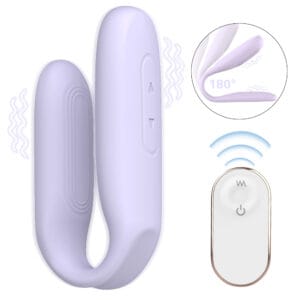 Popping-RCTSHD-S582-2
3-in-1 Design Remote Control Couple Sex Toy Wearable Panty Vibrator
Read morePopping-RCTSHD-S582-23-in-1 Design Remote Control Couple Sex Toy Wearable Panty Vibrator
Ultra-Silent Innovation: Featuring advanced noise-reduction motors, this ultra-quiet vibrator is perfect for use in hotels or shared living spaces, or even when you want to enjoy quiet time. Relax and indulge in your luxurious personal moments with this discreet panty vibrator, wearable adult toy, or vibrating panty with remote.
⚡ Dual-Stimulator Revolution: Experience a new level of pleasure with flexible 90° bending and dual motors. The synchronized design stimulates the clitoris, G-spot, and anal areas at the same time, offering you an all-around exciting experience, whether you’re using a couples vibrator or any of the other sex toys for added pleasure.
🌊 IPX7 Aquatic Adventure: Whether you’re in the shower, by the pool, or in the bath, the waterproof design lets you freely explore your desires. This remote control vibrator ensures your passions are unleashed no matter where you are, making it a perfect companion for adventurous foreplay.
🎮 Remote-Control Mode: From gentle ripples to intense pulsations, fully control the rhythm and intensity with the remote control. Whether used solo or with a partner, this feature takes your pleasure experience to new heights, making it one of the most versatile adult toys available.
🔋 Long-Lasting Power: Equipped with magnetic charging, this vibrator recharges quickly and provides long-lasting pleasure. Enjoy uninterrupted fun without the worry of running out of power.
🩺 Premium Safety: Made from high-quality food-grade silicone materials, this vibrator ensures a comfortable and safe experience, so you can enjoy worry-free pleasure with your adult toys.
View Details
Another common mistake is sending design files before any agreement is signed. I get it, you want a quote, and the factory says they need the CAD to price it. But once those files are out, they’re out. Send a simplified version for quoting if possible, or at least have a signed NDA in place before you transmit the full CAD. Some buyers watermark their preview files or send them in a non-editable format like a protected PDF. That’s not bulletproof, but it slows things down and shows you’re serious.
What about the realistic timeline? If you’re doing an OEM project from scratch, IP protection starts before the first sample is made. Week one to two, you negotiate and sign the NDA and Tooling Agreement. Week two to four, you share the design brief and receive the factory’s engineering feedback. Week four to six, the factory produces the DFM (Design for Manufacturing) report and revised CAD files. This is the danger zone, you need to review those revised CAD files carefully and make sure the contract says any revisions based on your original design are still your property. Week six to ten, the factory machines the mold. Week ten to twelve, first samples come off the mold. At this point, you have a physical product, a mold, and a design file set. You should also have a clear record of what you own. If you don’t have all of that documented, you’re behind.
On costs, mold fees for adult products vary wildly. A simple silicone toy with one mold cavity might cost $2,000 to $4,000. A complex multi-part vibrator with overmolding, multiple cavities, and tight tolerances can run $8,000 to $15,000. Some factories will amortize the mold fee over the first bulk order, for example, $3,000 mold fee, but you only pay $1,000 upfront and the remaining $2,000 is spread across your first 10,000 units at $0.20 per unit. That sounds nice, but it usually means the factory retains stronger ownership and control over the mold because they haven’t been fully paid. If you want full ownership, pay the mold fee upfront and get a mold ownership certificate or receipt that explicitly transfers title. The NDA is usually free to draft, but if you have a lawyer review it, budget $500 to $2,000 for a proper China manufacturing contract review. For a $50,000 product launch, that’s cheap insurance.
One thing I want to be very clear about because people misunderstand this constantly. A CE certificate or FCC report does not protect your design. It certifies that the product meets safety standards. It has nothing to do with who owns the design. Similarly, trademarking your brand name protects the brand, not the product shape. If you want to protect the actual product design, you need a design patent or utility patent, and those are expensive and slow, six months to two years in most jurisdictions, and $3,000 to $10,000 in legal fees. Most B2B buyers in the adult product space don’t patent their designs because the product lifecycle is short and the cost is high. Instead, they rely on contractual protection, the NDA, the Tooling Agreement, and the relationship with the factory.
So what do I actually recommend? Before you send a single CAD file, sign an NDA that specifically covers your product category and design files. Negotiate a Tooling Agreement that says you own the mold design and any derivative works, and that the factory cannot use the mold for other buyers without written permission. If you’re doing ODM and want exclusivity, get an exclusivity agreement with a realistic minimum order, usually 3,000 to 5,000 units per year for at least two years. Keep records of every file transmission, every revision, and every agreement. And don’t assume that paying the mold fee is the same as buying the design. It isn’t.
At S-HANDE, we handle this differently than a lot of factories because we got tired of seeing buyers get burned. For every OEM project, we provide a standard Tooling Agreement and NDA before any design files are exchanged. The agreement says clearly that the buyer owns the original design, the buyer owns the mold, and any DFM adaptations we make are derivative works that belong to the buyer. We don’t use your mold for other buyers, period. For ODM projects, if you want exclusivity on a catalog item, we offer an exclusivity agreement with a minimum order commitment that we negotiate together based on your sales projections, we’re not going to demand 10,000 units if you’re launching a new brand. We also keep full file transmission logs and revision records, so if there’s ever a question about who changed what, we have the paper trail. Mold fees are quoted transparently and we provide a mold ownership certificate on full payment. If you ever want to move the mold to another facility, we help coordinate the transfer and provide the technical drawings needed for the new factory to adapt it. That last part almost never happens, but we want you to know you have the option.
Here’s the bottom line. IP protection in OEM/ODM isn’t about being paranoid. It’s about being clear. Most factories aren’t out to steal your design. But a factory that doesn’t have a clear contract is a factory that, six months from now, might decide to reuse your mold for another customer who walked in with a bigger order. The way to prevent that isn’t trust. It’s paperwork. Spend the time and money to get the NDA and Tooling Agreement right before you share anything, and you’ll sleep a lot better when your product hits the market.
Have other questions about OEM/ODM, IP protection, or anything else? Contact S-HANDE B2B Support and we’ll walk you through it.